


North Carolina Elopement Checklist: Everything You Need
You want to elope in the Smoky or Blue Ridge Mountains (or even along the Carolina coast). You’ve got a vision. But every time you search for help, you end up with a dozen browser tabs, conflicting blog posts, and more questions than when you started. That’s not a planning problem, that’s an information problem, and this North Carolina elopement checklist fixes it.
NC elopements have real moving pieces: a marriage license with specific rules, location permits that vary by park, a packing situation that depends on terrain, and a timeline that has to account for golden hour and a dinner reservation. None of it is complicated once it’s laid out clearly. That’s exactly what this article does. I’ve also created more specific guides for eloping in the Asheville area or North Carolina in general, I have that too!
This is the same North Carolina elopement planning checklist I share with out-of-state couples who book with Laura Sparks Photography before they’ve even figured out which NC location they want to elope in. It covers the legal steps, permits, vendor booking timeline, packing essentials, a sample day timeline, and a realistic budget breakdown.
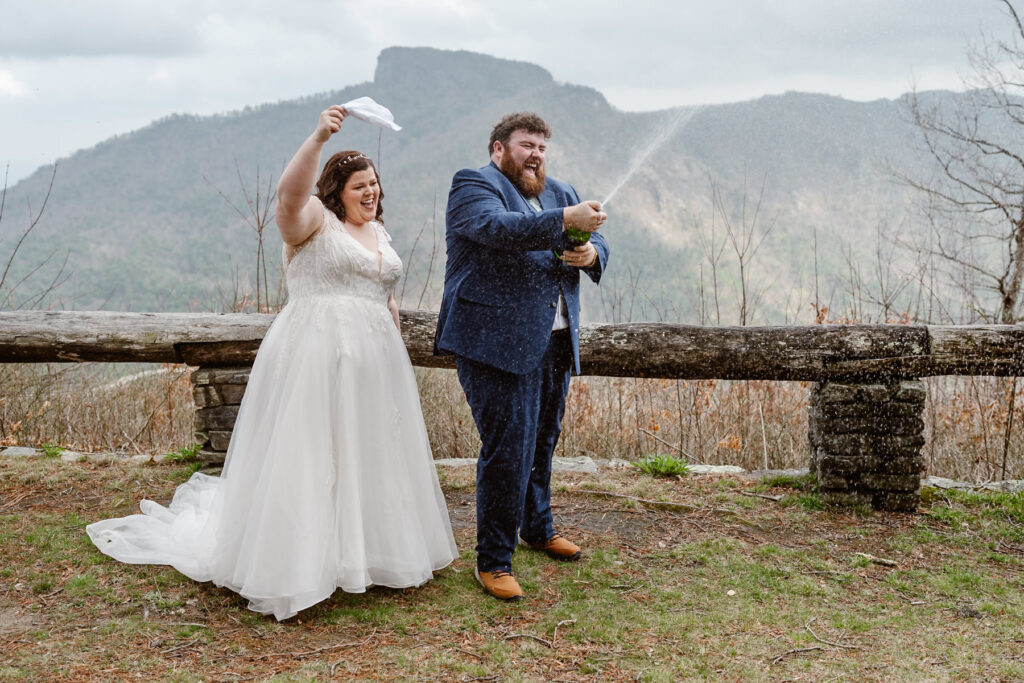
North Carolina Elopement Checklist: Legal Steps
North Carolina keeps the legal side straightforward. You need a marriage license, a recognized officiant, and two witnesses. Here’s how each piece works.
Getting your NC marriage license
Most counties require both parties to appear in person at a Register of Deeds office; some counties allow an online pre-application but still require in-person completion. You don’t have to apply in the county where your ceremony takes place, which is a major convenience for out-of-state elopers. Bring a government-issued photo ID and your Social Security card. If you’ve been divorced before, have those details ready as well.
Many counties charge $60, Buncombe County, which covers Asheville, is one of them, but verify the fee with your specific county’s Register of Deeds before you go. There is no waiting period in North Carolina, which means you can get married the same day the license is issued. The license is valid for 60 days, so don’t apply too far in advance of your ceremony date.
Who can legally perform your ceremony
North Carolina requires a recognized officiant: a licensed minister or clergy member, a magistrate, or another person authorized under state law. A friend may officiate if they are authorized under North Carolina law, check the relevant statute or your county Register of Deeds guidance to confirm that a particular ordination or authorization is accepted. Verify this well before your wedding day, because an invalidly performed ceremony can create real legal headaches down the road.
Returning the license after the ceremony
Two witnesses must be present and sign the license at the ceremony. After that, the completed license goes back to the issuing Register of Deeds office, typically within 10 days. Don’t forget this step, it’s what makes the marriage legally recorded.
Picking your NC elopement location and what permits cost
Permit requirements vary significantly depending on which land management agency oversees your ceremony site. Before you fall in love with a location on Instagram, confirm the permit requirements for that specific spot. This part of the eloping in North Carolina checklist is where couples most often get caught off guard.
Blue Ridge Parkway and Asheville-area spots
Any ceremony on the Blue Ridge Parkway requires a Special Use Permit. The fee is $150 (non-refundable, split as a $75 application fee and $75 administrative fee), and you should apply at least 30 days out. For smoother processing, give yourself 60 days. You submit the application by email to BLRI_Permits@nps.gov after paying through Pay.gov. Craggy Gardens and The Lump both fall under this permit process. Check the Blue Ridge Parkway Special Use Permit page for current procedures before you apply.
Black Balsam Knob and Sam’s Knob are a different story. They sit within Pisgah National Forest, not on the Parkway. No permit is currently required for ceremonies with fewer than 75 guests in Pisgah National Forest, which makes these spots particularly appealing for couples who want big open ridgeline views without the permit paperwork.
NC State Parks like Chimney Rock or Hanging Rock
NC State Parks require a Special Activity Permit for ceremonies. Apply at least 14 days in advance. The fee is $70 for non-corporate events with 60 or fewer attendees, confirm current fees directly with the NC State Parks office for the park you plan to use, since rates can change. Hanging Rock and Chimney Rock State Parks follow this same process and both are have some of the most stunning waterfall and rock ceremony settings in the state.
Coastal and Outer Banks options
Cape Hatteras National Seashore requires a Special Use Permit ($100) submitted at least 30 days ahead. The Outer Banks is genuinely beautiful, but plan your timing carefully. Spring and fall are the strongest windows for coastal elopements. Summer brings heat, humidity, and Atlantic hurricane season, which runs June through November and creates real scheduling risk.
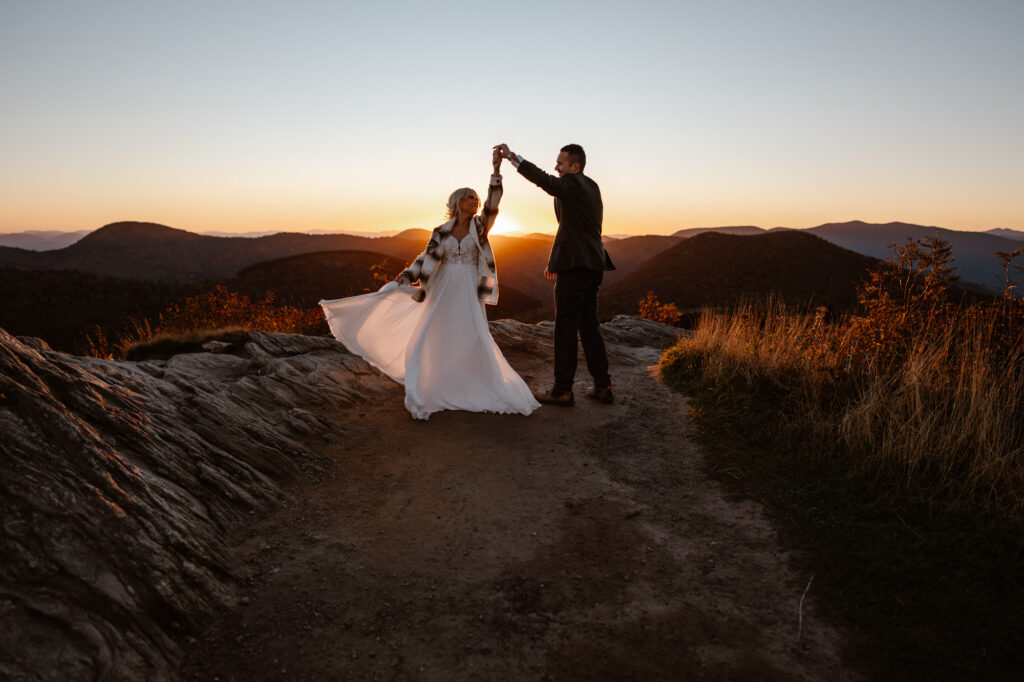
Pre-planning timeline: when to book what
Out-of-state couples often underestimate how early popular NC elopement dates fill up. October weekends in the mountains and peak spring bloom weekends book out fast, sometimes a year in advance. This booking roadmap keeps you ahead of the rush.
9-12 months out: lock in your date and photographer
Your photographer is the anchor of your entire vendor team, so book this first. For out-of-state elopers, working with a local NC photographer who already knows the permit offices, trailhead access, and seasonal weather saves hours of research. Laura Sparks Photography (hi, that’s me!) is based in Asheville and focuses on couples coming from out of state. I help with things like personalized planning guidance on locations, officiants, accommodations, and permits, so you’re not piecing it together alone from across the country.
3-6 months out: permits, officiant, and accommodations
Submit your location permit application well ahead of the minimum deadline, especially for Blue Ridge Parkway ceremonies. Book a professional elopement officiant for your NC ceremony location. Rates for western NC officiants typically run $300 to $900, with most full-service elopement packages falling near $500-$1,000. Reserve your accommodations during this window too, particularly if you want a mountain Airbnb near Asheville with private access and views.
1-4 weeks out: marriage license and final confirmations
Get your license within the 60-day validity window. Confirm vendor start times, permit approval numbers, and parking or trailhead logistics with every vendor. For Blue Ridge Parkway ceremonies specifically, verify parking access in advance so there are no surprises on the day itself.
North Carolina Elopement Checklist: What to Pack
What you bring depends on your terrain. Here’s a practical breakdown by situation, starting with the essentials every couple needs regardless of location. Keep this NC elopement checklist in your phone so nothing gets left at the cabin.
The essentials every couple needs
- Marriage license, government-issued ID, and/or all required travel documents
- Permit approval documentation and any required passes
- Rings and vow books
- Daypack with water, snacks, and a basic first-aid kit
- Sunscreen, bug spray, and a portable phone charger
- Headlamp if there’s any chance of low light on the trail in or out
Mountain and cold-weather additions
Mountain elevations in North Carolina are noticeably cooler than Asheville, and weather can change quickly, the National Weather Service regularly flags rapid afternoon shifts above 5,000 feet. A packable rain jacket and windproof outer layer are non-negotiable. Add wool socks, warm layers, a hat, gloves, hand warmers, and a thermos with something hot. If you’re hiking in late fall or winter, bring microspikes. Always carry a waterproof pouch for your marriage license and vow books, wet paper at the ceremony can be a real problem!
Beach variant swaps
For coastal elopements, swap the insulation layers for high-SPF sunscreen and a reapplication plan, plus wind-control essentials like bobby pins, hair ties, and a small grooming kit. Bring sand-friendly footwear and a change of shoes for after portraits. A waterproof bag for wet or sandy clothing will save you on the drive back.
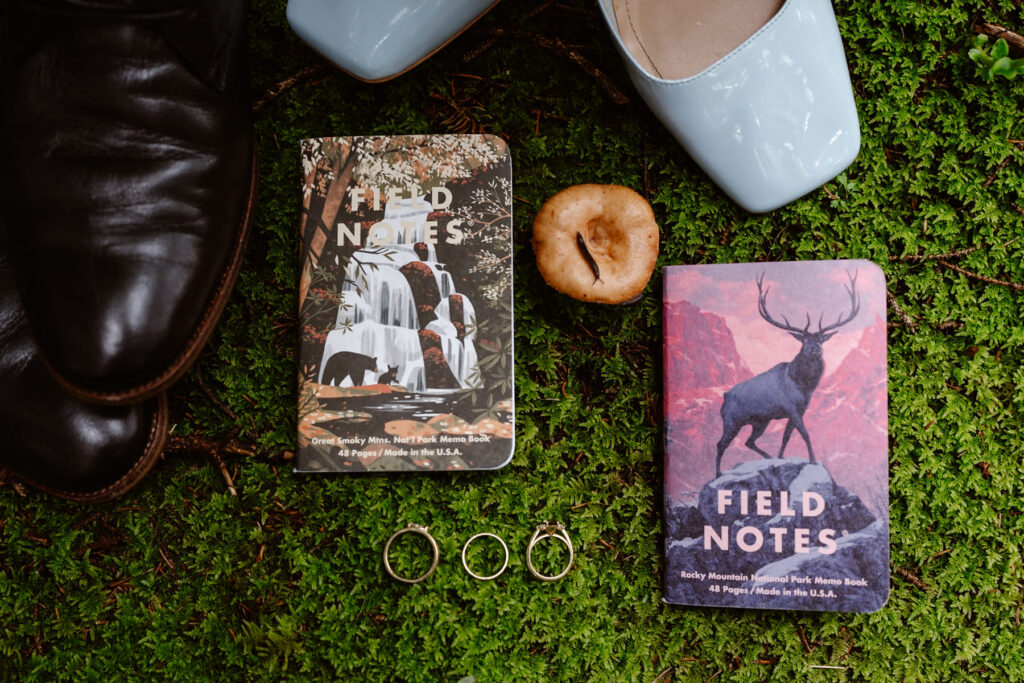
A sample 8-hour NC elopement day timeline
This timeline is designed around a late-afternoon ceremony and sunset portraits. It’s the most common structure for NC mountain elopements, and it’s also the most photogenic. Adjust the start times based on your specific sunset window and drive time from your accommodations.
The ceremony and golden-hour portrait window
- 1:30 PM, Photographer arrives; final prep, details, and first look at your lodging
- 3:00 PM, First look
- 3:30 PM, Leave for the ceremony location with buffer for parking and trail access
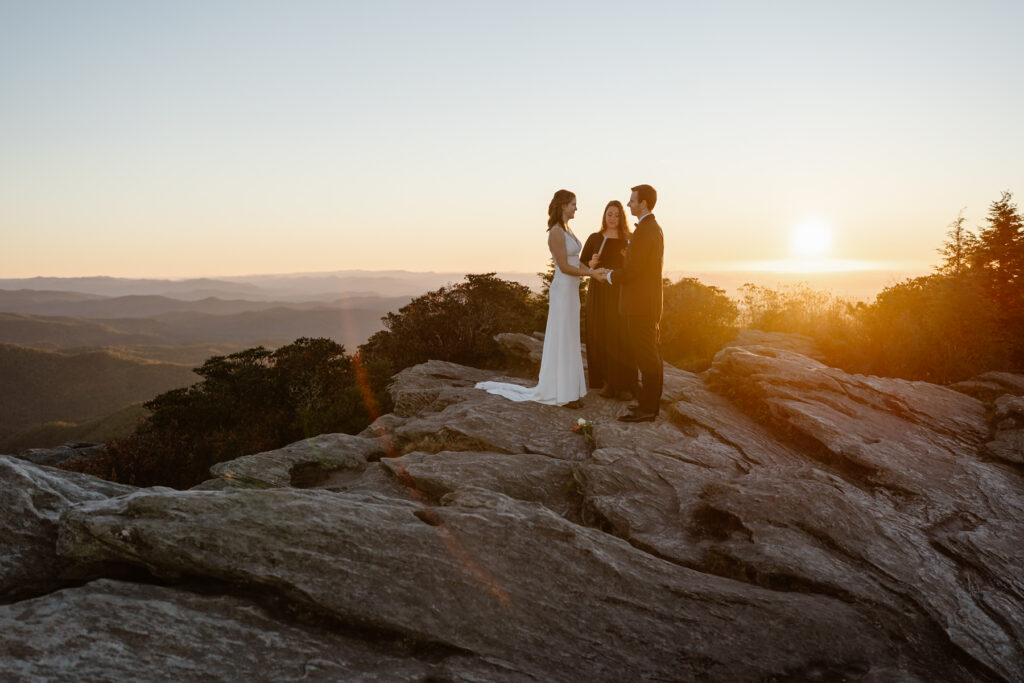
- 5:15 PM, Ceremony and vows (plan 15 to 30 minutes)
- 5:45 PM, Guest and group photos
- 6:30 PM, Travel to a second scenic spot or overlook
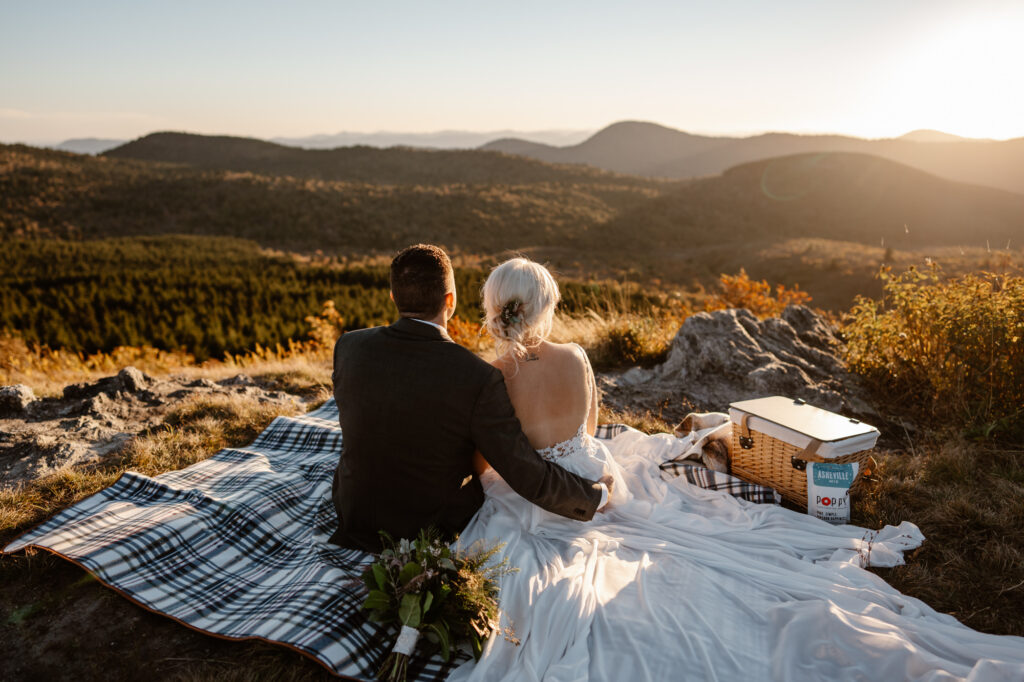
- 6:15 PM, Mountain picnic with private chef
- 7:30PM, Golden hour portraits, first dance, cake
- 9:30 PM, High-fives and goodbyes, depart
Mountain roads, gravel access points, and trail hikes all eat into your day faster than you expect. Add 20 to 30 minutes to any transit segment that involves a trailhead. If your ceremony site is on the Blue Ridge Parkway, verify parkway access during your permit application so there are no day-of surprises.
Quick budget snapshot for an NC elopement
A modest North Carolina mountain elopement that includes photography, planning support, permits, an officiant, and two nights of lodging typically lands between $8,000 and $12,000 all in. A more curated experience with florals, hair and makeup, and additional guests can reach $12,000 to $20,000. Here’s where the fixed costs land.
The fixed costs you can count on
- Marriage license: $60 in many counties, verify with your county’s Register of Deeds
- Blue Ridge Parkway ceremony permit: $150 (non-refundable)
- NC State Parks Special Activity Permit: $70 (verify current fee with the specific park)
- Cape Hatteras Special Use Permit: $100
- Professional elopement officiant: $300 to $1,000 depending on ceremony length and travel
- Mountain Airbnb near Asheville: approximately $150 to $400 per night (varies by season and property)
Where to flex your budget
Photography is typically the largest line item and also the most lasting investment from your elopement day. A local NC photographer who includes planning support in their package often saves you money on logistics you’d otherwise spend hours researching yourself. Florals, attire, and your post-ceremony dinner are the most flexible categories. Many couples skip formal florals entirely and do a homemade artificial bouquet, or nothing at all, and it photographs beautifully either way.
Use this North Carolina elopement checklist to start planning your day
North Carolina has real legal steps, real permit requirements, and real terrain to think through. But none of it is as complicated as it first looks once it’s laid out this clearly. The marriage license process is fast, the permit fees are manageable, and the locations are genuinely stunning once you know which ones fit your vision.
The biggest advantage for out-of-state couples is having someone local in their corner, someone who already knows the permit timelines, which trailheads close seasonally, and which areas are worth the extra mile of hiking. If you’re ready to move from research to actual planning, reaching out to a local Asheville photographer is a strong first move. At Laura Sparks Photography, the initial conversation costs nothing, and it replaces hours of guesswork with specific answers for your specific day.
The mountains (or coast) are waiting. You now have a clear, practical North Carolina elopement checklist to get there, license in hand, permit filed, and golden hour locked in. Let’s go!

Hey! I’m Laura Sparks, an elopement photographer based in Asheville, NC. The possibilities really are endless for eloping in North Carolina!
Reach out even if you don’t have it all figured out yet. I’ve called these mountains home for almost 20 years so if you need help from a local, I’m your gal!
